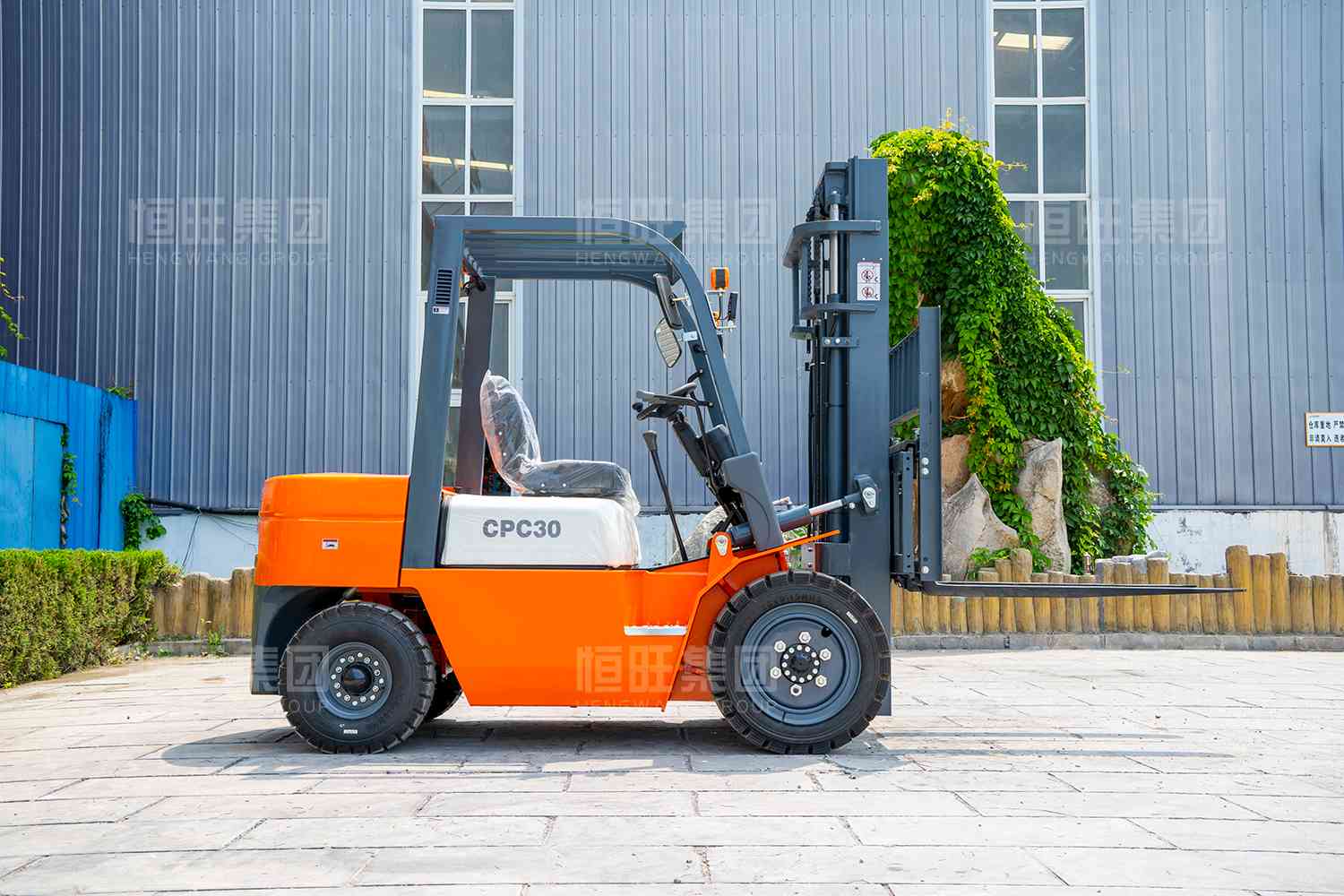
When a forklift experiences engine power loss during operation, troubleshooting should be conducted across multiple dimensions, including fuel supply, intake/exhaust systems, injection systems, and mechanical components. Below are common fault causes and corresponding solutions:
Obstruction in the Low-Pressure Fuel Circuit
Fault Symptoms: Clogged fuel tank breather hole, blocked or leaking fuel lines, air ingress due to loose joints
Solutions: Unclog the fuel tank breather hole, inspect and replace damaged fuel lines, tighten joints to restore sealing.
Filter Blockage Issues
Excessive dust accumulation in the air filter causing insufficient intake, and debris deposition in the diesel filter leading to poor fuel flow.
Solutions: Regularly clean or replace the air filter element, promptly replace the blocked diesel filter.
Inaccurate Injection Timing
Deviation in injection advance or lag angle, resulting in reduced combustion efficiency.
Solutions: Use professional tools to calibrate injection timing, ensuring it meets the original manufacturer's parameters.
Performance Abnormalities in the Fuel Injection Pump and Injectors
Wear of the injection pump plunger causing insufficient fuel supply, and poor atomization in individual injectors leading to abnormal single-cylinder operation.
Solutions: Disassemble the injection pump for professional calibration, inspect injector atomization status and repair or replace as needed.
Exhaust Blockage Affecting Combustion
Carbon deposits or foreign objects blocking the exhaust pipe or muffler, hindering exhaust gas discharge.
Solutions: Disassemble the exhaust pipe to clean carbon deposits and blockages, restoring smooth exhaust flow.
Insufficient Cylinder Pressure
Inadequate valve sealing in the valve train, wear of piston rings, or scoring of cylinder liners, leading to reduced compression ratio.
Solutions: Check and adjust valve clearances, grind valve seats; if piston components are excessively worn, replace pistons, piston rings, or rebore/hone cylinder liners.
Overheating in the Cooling System
Poor heat dissipation causing the engine to operate at high temperatures, leading to power loss.
Solutions: Inspect components such as the water pump, fan, and radiator, clean scale from radiator fins, and repair leaks.
Improper Adjustment of the Control System
Loose accelerator cable or insufficient stroke, causing failure in accelerator signal transmission.
Solutions: Readjust the tension of the accelerator cable to ensure the throttle valve opens fully without jamming.
Impact of Fuel Quality and Moisture
Air or water mixing into the fuel, resulting in insufficient combustion.
Solutions: Drain air from the fuel lines, replace contaminated fuel, and clean the fuel tank.
Prioritize inspection of vulnerable components: Quickly locate basic faults by checking air filters, diesel filters, injectors, etc.
Use diagnostic equipment: Detect cylinder pressure with a cylinder pressure gauge and analyze injection waveforms with an oscilloscope to improve troubleshooting efficiency.
Implement regular maintenance: Replace filters and clean fuel lines according to schedules to avoid chain failures due to maintenance neglect.
Conducting systematic troubleshooting for forklift engine power loss in a timely manner can effectively prevent operational efficiency decline and component overwear, ensuring the equipment operates continuously and stably.